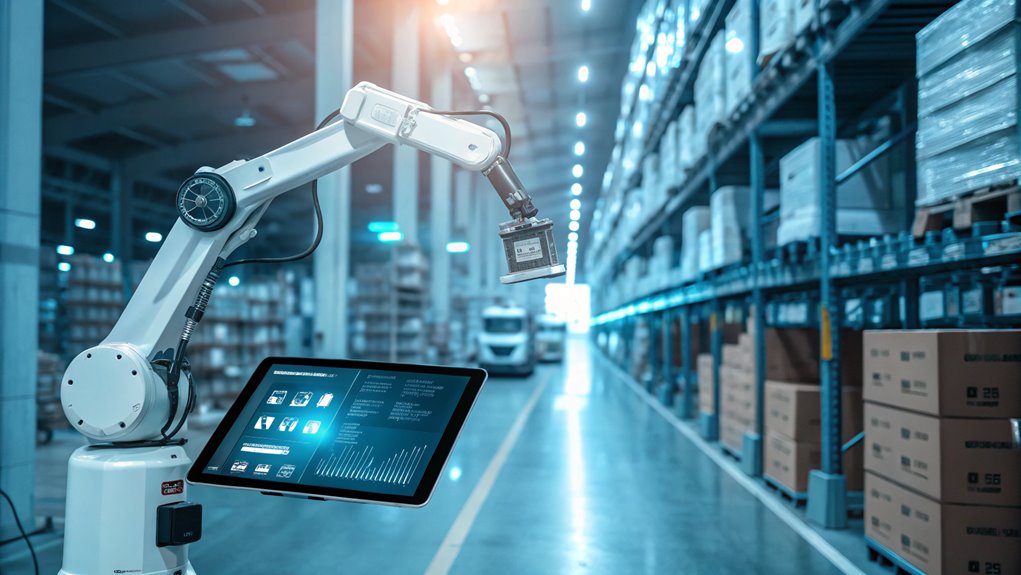
Think of a supply chain as a relay team. If even one runner slows down, the whole team misses the mark. That’s why automation matters now more than ever—and why leaders hunt for clear, verified automation success stories in supply chain. When ports back up, labor gets tight, and demand shifts overnight, manual fixes cannot keep pace.
Speed and accuracy now tie directly to profit. The winners use a strategic approach to supply chain automation that lines up tech with business goals and delivers ROI in weeks, not quarters. These automation success stories go beyond gadgets on a floor. They show cross-functional teamwork, integrated systems, and a focus on outcomes like throughput, OTIF (on-time, in-full) delivery, and inventory turns. That focus turns chaos into a controlled, data-driven flow.
This article walks through real, documented results across sectors. You’ll see a $250M recovery in life sciences, 2-10% EBITDA gains in metals, a 25% EBITDA rise in CPG, and multi-hundred-percent productivity jumps in retail, e-commerce, food and beverage, 3PLs, and healthcare. We also break down the difference between failed tech-first rollouts and credible, tech-enabled business-wide change. Along the way, you’ll see how OptimizePros delivers Fortune 500-level impact with zero-disruption rollouts and profit-first methods that often produce up to $500K in quarterly savings. Read to the end to map these wins to your own roadmap and turn your automation success stories in supply chain into fast, measurable results.
The Strategic Framework Behind Successful Supply Chain Automation
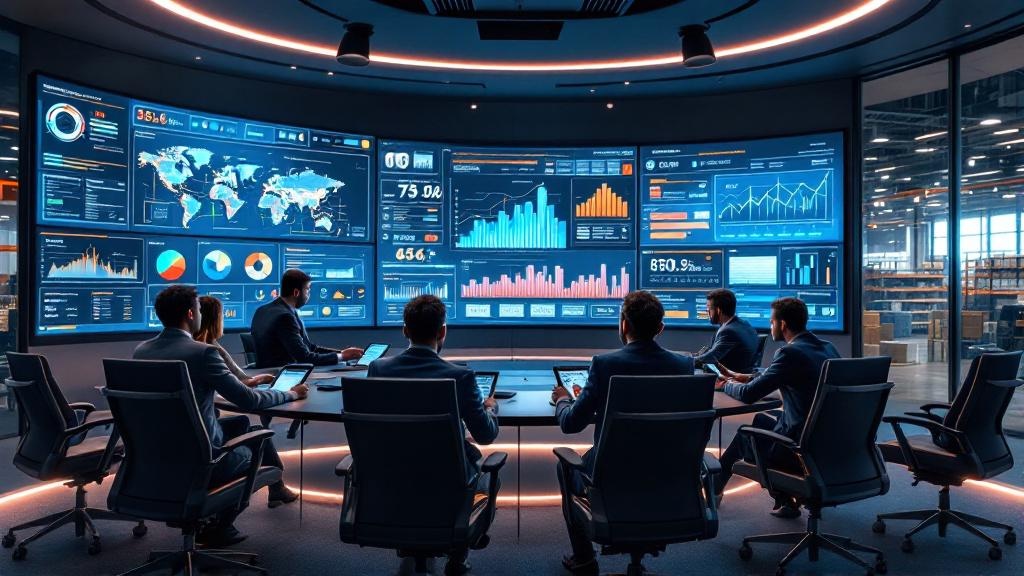
Most failed projects make the same mistake: they start with tools and skip the business case. When IT drives in isolation, projects stall, adoption lags, and the ROI case weakens. Teams then revert to old habits, and the cash impact never shows up. The result feels like a patchwork of pilots, each with narrow gains and no enterprise lift.
High performers follow a different path. They run a tech-enabled business-wide program. This model ties business strategy, operating model design, and modern tech into one plan. It also leans on an enterprise platform that unifies data across finance, operations, procurement, and logistics. That single source of truth cuts through siloed reports and speeds decisions.
“Without data, you’re just another person with an opinion.” — W. Edwards Deming
Stakeholder buy-in isn’t a soft factor; it’s a control point. The best programs define who decides what—and why—up front:
- Finance sets the metrics and the payback bar.
- Operations validates feasibility and resource load.
- IT designs secure, scalable patterns that align with the roadmap.
- Procurement supports supplier change and contract hygiene.
Together, they pick the right sequence of use cases and track value delivery from week one.
OptimizePros follows this playbook with a profit-first approach and zero-disruption rollout patterns. We start with the money trail, tie every use case to clear KPIs, and deliver early wins while the program scales. That’s how you turn automation into EBITDA, not just activity.
Key Elements of Tech-Enabled Business Transformation
A successful pattern starts with true integration across departments and regions. Data flows through connected systems, so every team works from the same facts. Clear KPIs keep the focus on cost per order, throughput per asset, OTIF, and inventory turns, not vanity metrics. Change management sits at the center, with role clarity, training, and process playbooks that make adoption stick across shifts and sites.
Predictive analytics and AI then raise the ceiling. Forecasts sharpen. Capacity plans match real demand. Alerts surface risks before they hit service. AI-guided tasking pairs well with physical systems like AMRs and GTP stations, so people and machines move in sync. The right partner knows your P&L targets and your operational constraints. They guide the tech stack and the sequence to hit your ROI window, not just a feature checklist.
Life Sciences Transformation: $250M Recovery Through Holistic Automation

A large life sciences company in Asia stopped a data-focused program after six months. It didn’t connect to business priorities, and stakeholders saw little value. The company pivoted to an Enterprise-Wide Platform Transformation with seven cross-functional groups. Over 12 months, they mapped more than 40 operational moves across the value chain and aligned each one to a business case.
The result was a potential $250M value lift, with most gains coming from Source to Pay. A central control tower improved risk response and inventory balance. S&OP moved from manual, regional views to a single plan that set a steady rhythm across sites. Freight and logistics costs came into focus across regions, so leaders could act on a clean view of spend and routes.
What changed:
- Alignment to the biggest cost drivers first.
- One data model across teams and regions.
- Governance that kept wins in place and stopped backsliding.
Source to Pay: 70% of Total Transformation Impact
Procurement drove the largest wave of savings. A new sourcing platform and spend cube analytics revealed:
- Pricing gaps across geographies and suppliers,
- Compliance issues and maverick spend,
- Bundling options and tighter category strategies.
A global operating model then linked category leaders and local buyers, so strategies set at the group level translated into site-level action. Category management matured, supplier bases consolidated, and cycle times dropped. Teams saw supplier performance in one place, so they could act faster on contracts and quality. The company ramped up value capture without adding layers or slowing decisions.
Supply Chain Control Tower and Real-Time Visibility
A control tower gave leaders one pane of glass for demand shifts, supply risks, and network constraints. Standard alert rules flagged shortages and excess early, and visual dashboards guided the right response. Automated checks balanced stock across sites, which cut manual chases and errors.
S&OP synced with this view, so plans reflected real constraints and current demand. That tighter loop reduced waste and improved service, while teams spent less time stitching together spreadsheets and more time solving the right problems.
Manufacturing Excellence: Metals Producer Achieves 2-10% EBITDA Gains
A metals producer ran with manual planning and siloed data. The result was unplanned downtime, high inventory, and low throughput. The company reset with an enterprise platform and a cloud-based APS. They built clear roles with RACI charts, wrote process handbooks, and kept communication frequent and direct.
IT and supply chain worked as one, with business value as the filter for every decision. Four areas showed the biggest lift:
- Higher production output,
- Lower emissions,
- Better service,
- Leaner inventory.
Each metric tied back to a clear change in process and system behavior.
Throughput Maximization and Carbon Emission Reduction
APS-driven plans used specification-level rates for each line and product. That let schedulers align the right jobs with the right assets to raise output. The gain translated into a 2-5% EBITDA lift as lines produced more with the same footprint. Better planning also allowed more recycled inputs where feasible, which reduced carbon emissions by 8-10%. Sustainability goals and operational goals moved together—and both showed up in financials.
Service Level and Inventory Optimization Outcomes
Order priority logic and smarter line allocation improved on-time, in-full performance by 5-10%. Inventory planning locked in with production plans, so safety stocks stayed at the right levels across the network. The company reduced inventory by 9-10%, freeing cash without hurting service. The compounding effect was clear: higher throughput, better service, and lower inventory showed up together, not as trade-offs.
Consumer Packaged Goods Turnaround: 25% EBITDA Increase
A dairy brand saw margins erode as rivals pressed hard. Past programs only scratched the surface. Leadership launched an enterprise platform effort that identified more than 150 moves across procurement, manufacturing, support functions, commercial levers, sales, and the supply chain. Each move had an owner, a metric, and a payback path.
The total impact reached roughly a 25% EBITDA rise. The biggest contributors came from factory process automation and procurement redesign. Support functions removed layers, the commercial team tuned promotions, and the sales network sharpened its portfolio. The company built new skills and reinforced a culture of continuous improvement to hold the gains.
Manufacturing and Procurement as Primary Value Drivers
On the factory floor, automation cut raw material waste and energy use, driving a 5-8% EBITDA lift. Predictive maintenance cut downtime, and quality checks at the edge reduced rework. Procurement delivered 4-7% through design-to-value that trimmed packaging and supplier consolidation that stabilized pricing. These two areas fed each other. Better specs and suppliers raised yield, while smarter production made the most of each dollar spent. Demand-driven scheduling kept capacity and orders in sync, which stabilized service and costs.
Revenue Growth Management and Support Function Efficiency
Revenue Growth Management added a 2-5% EBITDA boost by focusing discounts and promotions on accounts that returned the best payback. Support functions delivered 4-7% through centralization and the removal of duplicate work. The sales network gained 1-3% by simplifying its portfolio and routing effort to higher-return items. A tighter digital platform across the supply chain clipped long-haul costs by about 1% of EBITDA. Together, these moves created a durable shift in how the business runs.
Retail and E-Commerce Fulfillment: Speed, Accuracy, and Scalability Gains
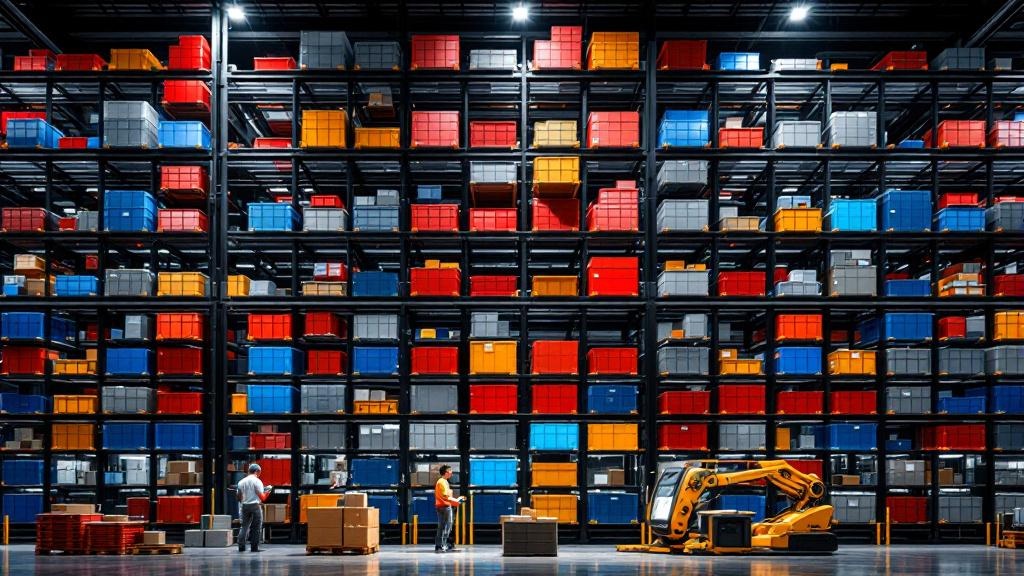
E-commerce pushes fulfillment centers to move faster with fewer touches and fewer errors. Labor tightness adds another constraint, and peak seasons make it worse. Leaders answer with goods-to-person systems, robotic shuttles, AMRs, and smart software that orchestrates work in real time. The results show up as higher order accuracy, shorter cycle time, and more capacity in the same box.
Across major retailers and brands, common patterns stand out. High-density systems like AutoStore shrink travel. WES and WMS synchronize tasks and keep assets busy. AMRs flex to match volume, so you add capacity without adding fixed space. These automation success stories in supply chain show that speed, accuracy, and scalability can rise together.
Large-Scale Retail Modernization Success Stories
Walmart deploys Symbotic systems across regional distribution centers to automate receiving and sorting at scale. Products move to trucks and shelves faster, and associates spend more time on higher-value work. Macy’s uses AutoStore within the Polaris strategy to expand capacity inside existing walls and cut processing time for orders. Best Buy pairs automation hardware with strong software control to improve inventory accuracy, shorten lead times, and drop operating costs. The common thread is simple: integrated systems plus smart orchestration power true omnichannel, not just faster picking in isolation.
Specialized and Sporting Goods Fulfillment Innovation
Decathlon built a customer-facing micro-fulfillment setup in Calgary that uses an AutoStore GTP system to blend retail and fulfillment in a tight footprint. PUMA’s Indianapolis site runs the AutoStore Black Line to increase storage capacity more than tenfold, while bin deliveries per hour rise about 25%. L.L. Bean teamed with Fortna to bring multiple channels under one roof, which lifted speed and output while extending the life of the building. Newegg’s 400,000-square-foot Indianapolis DC pairs OPEX Perfect Pick with a WES to support Midwest growth. This mix shows how automation adapts to different brands and spaces without forcing a one-size plan.
Food, Beverage, and Grocery: Automation in Temperature-Controlled Environments

Perishables add strict rules. Items span multiple temperature zones, traceability must be airtight, and throughput must stay high. Automation stands out here because it maintains the cold chain while moving volume with precision. ASRS, shuttles, and pallet-handling systems work with a WMS to track every lot and keep stock where it needs to be.
Operators see fewer touches, better accuracy, and safer work in cold areas. Energy use drops as dwell time falls. The business case stacks up fast when spoilage, labor, and service all improve at once.
Grocery and Wholesale Automation Success
Kroger applies a fully automated system for dairy to tighten accuracy and traceability while cutting turnaround time. Meijer’s Wisconsin food DC uses WITRON OPM to build store-ready pallets automatically, which speeds flow and reduces touches. Innnes in Iceland uses an SSI SCHAEFER setup that supports dry, fresh, and frozen zones with a clear view of product movement end to end. Mydibel runs an automated channel storage approach in a deep-freeze warehouse at -24°C where Orbiter shuttles and SRMs maintain a steady cold chain. These cases share needs for cold-rated equipment, strong WMS control, and fast sortation that respects temperature rules.
Beverage Production and Distribution Excellence
Asahi Beverages installed a Dematic ASRS and saw a productivity jump near 250% at a key site. Plzensky Prazdroj, the largest brewer in the Czech Republic, uses AGV block storage from System Logistics to hit ROI targets in a new build. British Sugar connected a new Mecalux setup direct to production with pallet shuttles and stacker cranes, so storage and shipping keep pace with demand spikes. The steadier flow reduces labor exposure and improves safety in heavy zones.
Third-Party Logistics (3PL) and Global Supply Chain Visibility
3PLs compete on speed, cost, and adaptability. They also compete on data. Clients want real-time status, fast onboarding, and proof that operations scale without chaos. AMRs, GTP systems, and control platforms help 3PLs hit tight SLAs and ramp for peaks without adding fixed space.
Real-time visibility adds another edge. Autonomous scanning robots and digital twins feed live inventory status to teams and clients. That single view clears disputes, shrinks cycle time, and guides action grounded in facts, not assumptions. These automation success stories in supply chain show how hardware and data together create the edge.
3PL Operational Excellence Through Robotics
ShipMonk uses Locus Robotics in a multi-bot pattern that fulfills more than a million packages per month while holding firm SLAs. Productivity rises, labor cost per order falls, and robots scale with demand. CEVA Logistics in Australia teamed with Geek+ and Körber to hit a fourfold jump in picking rates as volumes surged. Active Ants in Europe runs a Dematic-installed AutoStore for small-item storage and packing to support many web shops. The ROI case is direct: you add capacity fast, cut touches, and delay the need for more space.
Real-Time Visibility and Digital Twin Technology
Maersk trials Dexory autonomous robots in UK sites to capture inventory data in real time and feed a shared supply chain view. Yusen Logistics taps Dexory to reach daily accuracy in dense, block-stacked areas where manual checks lag. NFI deploys Dexory to enrich visibility and enable teams with fresh, actionable data. Vente-unique.com shows why data is as important as hardware by moving to DexoryView for live insights. Digital twins now guide proactive moves, not just reports after the fact.
Healthcare and Pharmaceutical Automation: Precision and Compliance at Scale
Medical and pharma operations demand near-zero error and fast service. Every pick matters, and every movement needs a traceable record. Automation fits these needs with high-density storage, AI-driven piece picking, and strict tracking so patients and providers get what they need on time, every time.
AutoStore, AMRs, and smart picking robots run around the clock without fatigue. WMS and audit logs record every action. The result is speed, control, and compliance in one flow.
Medical Supply Distribution Excellence
Medline, the largest privately held medical supplier in the US, uses a Swisslog robot-driven AutoStore in Libertyville, Illinois. The system packs dense storage with fast goods-to-person picking and drives next-day service to hospitals, surgery centers, and pharmacies. Accuracy stays high as SKUs grow, and the platform keeps a clean audit trail for every tote and item. The operation meets demand swings without giving up control or traceability.
Automated Online Pharmacy Innovation
The apo.com Group in the Netherlands runs RightHand Robotics RightPick units with AutoStore in a 220,000-square-foot site. Robots manage both inbound and outbound work around the clock, while AI vision picks, scans, and places thousands of SKUs per day. The setup supports strict tracking and verification that matches pharma rules. It shows how AI-driven piece picking now handles items that once required human dexterity.
Core Technologies Powering Measurable ROI
A handful of mature and emerging systems power most wins you see in the field. Each tool solves a specific problem, and the best results come when they work together. Physical systems raise speed and density. Software orchestrates people and robots and brings data to the surface. Predictive models shift teams from “react” to “anticipate.”
Selection should tie to a clear business case with an expected payback. AMRs and GTP often hit returns in months. ASRS can take longer but may create step-change capacity. APS and control towers raise planning quality fast. With the right integration, each dollar invested ties to throughput, service, or working capital.
Physical Automation Systems
- Goods-to-person systems like AutoStore and OPEX Perfect Pick bring inventory to a fixed station and erase wasted travel.
- Automated storage and retrieval from providers such as Dematic and SSI SCHAEFER packs more stock into the same cube and moves loads with speed and repeatability.
- AMRs from Locus Robotics and Geek+ glide through live operations and scale up or down as volume changes.
- AGVs from groups like System Logistics carry pallets on fixed paths and remove forklift traffic on routine runs.
- Robotic piece-picking from RightHand Robotics now handles a wide mix with AI vision and smart grippers.
- High-speed sorters from firms like Beumer route cartons and parcels to the right lane at volume.
Intelligent Software and Data Platforms
- OptimizePros AI and Analytics Layer: Brings Fortune 500-grade models to mid-market and enterprise teams, ties use cases to KPIs, and accelerates measurable ROI within weeks while integrating with existing WMS, WES, APS, and planning tools.
- WMS/WES from providers such as Körber and Dematic iQ coordinate tasks across people, robots, and zones in real time.
- APS platforms plan at the specification level, run what-if scenarios, and sync production with inventory targets.
- Supply Chain Control Towers give leaders one view with standard alerts for demand and supply shifts.
- Digital Twins from platforms like Dexory feed live inventory status and location to drive action, not just analysis.
- Predictive analytics and AI improve forecasts, smooth labor plans, and flag risks early.
The OptimizePros Advantage: Delivering Measurable ROI Within Weeks
OptimizePros centers every project on profit. We map the cash levers first, then line up the tech and the operating model that hit those targets. Our teams bring large-enterprise playbooks to mid-sized and large companies without added overhead. The method avoids downtime with zero-disruption rollout patterns, so your operation stays live while upgrades land.
Clients often see measurable gains within weeks and up to $500K in quarterly savings as programs scale. We cover AI-driven network and inventory optimization, machine learning models for production, predictive analytics for procurement, and hands-on guidance for enterprise platform work. The aim is clear: reduce waste, cut cost-to-serve, lift service, and free cash—fast.
How OptimizePros Avoids Common Transformation Pitfalls
- We don’t start with tools; we start with your P&L goals and constraints.
- Cross-functional working groups align operations, finance, technology, and procurement from day one.
- Capability building and change management are core, not an afterthought.
- Enterprise-wide platform thinking removes silos and creates flow across planning, execution, and finance.
- Predictive analytics and AI keep gains growing after go-live.
- We set KPIs up front, track them in the open, and adjust as needed.
- No cookie-cutter playbooks—every program maps to your network, product mix, and service promise.
Implementation Pathway and Typical Timeline
- Phase 1: Full assessment across the value chain (4–6 weeks) reveals 40+ opportunities.
- Phase 2: Prioritization (2–3 weeks) ranks opportunities by ROI, effort, and strategic fit.
- Phase 3: Zero-disruption rollout. A full enterprise platform effort can run 12–18 months, while focused waves land much faster.
Financial impact begins in weeks as early use cases go live. Clients often see up to $500K in quarterly savings and 2–25% EBITDA gains, based on scope. We stay engaged to build a culture of continuous improvement and keep the value compounding.
Conclusion
Across life sciences, metals, CPG, retail, food and beverage, 3PLs, and healthcare, the winners follow the same playbook. They run a tech-enabled business-wide program, align stakeholders, and use technology as the enabler—not the driver. They manage change with discipline and tie every move to clear KPIs. The proof is strong: $250M value lifts, 250-400% productivity jumps, 2–25% EBITDA gains, 10x capacity increases, and 5–10% service gains—often with zero disruption.
Delay now costs real money. Competition, labor limits, and customer expectations raise the bar each quarter. The difference between failure and success comes down to approach. A tech-first project stalls. A business-led program backed by the right tech stack delivers repeatable ROI.
These systems and platforms are proven and ready. Digital twins, AI, and predictive models push the frontier even further. If you face rising costs, delivery delays, or inventory swings, now is the time to assess your readiness. OptimizePros brings Fortune 500-level expertise, a profit-first method, and zero-disruption rollouts that deliver measurable outcomes. Real companies, real results, real ROI. Schedule a comprehensive assessment and find your $500K-plus quarterly savings path.
FAQs
What Is The Typical ROI Timeline For Supply Chain Automation Investments?
Focused waves can show measurable ROI within weeks, especially with AMRs, GTP, or software-led initiatives. Comprehensive enterprise-wide platform efforts typically reach full ROI in 12–18 months. Typical payback windows by category include:
| Category | Typical Payback Window |
|---|---|
| AMRs, AutoStore | ~18–24 months |
| APS, Software Platforms | ~6–12 months |
| ASRS | ~3–5 years |
Results depend on approach, current systems, and change management quality. OptimizePros clients often see up to $500K in quarterly savings as programs scale.
How Do Successful Companies Avoid The Common Pitfall Of Failed Automation Projects?
They run a tech-enabled business program, not an IT-only project. Cross-functional teams align on KPIs and value from day one, then roll out in phases that prove impact before scaling. They pick partners with deep operational and technology skill, not just software vendors. They invest in training and process ownership, and they tie goals to profitability—not just activity metrics. This pattern turns pilots into compounding value.
What Size Company Benefits Most From Supply Chain Automation, And What Level Of Investment Is Typically Required?
Mid-sized to large manufacturers and distributors, often $50M in revenue and up, see the biggest returns because volume magnifies gains. Investments vary. AMR projects can start around $200K–$500K. ASRS projects can range from $2M to $10M or more. Enterprise platform efforts with software and data integration can range from $500K to a few million. Many teams use phased programs or as-a-service models to reduce upfront capital while still hitting ROI goals.
Can Automation Be Implemented Without Disrupting Current Operations?
Yes. The best programs use phased rollouts, parallel runs, and rigorous testing before a cutover. Strong change management—clear process maps, role-based training, and frequent communication—prevents missteps. Modular tech such as AMRs allows incremental deployment. Cloud-based platforms ease migration. OptimizePros uses zero-disruption methods so plants and DCs keep shipping while upgrades go live. The case studies above show that continuity and fast ROI can happen at the same time.