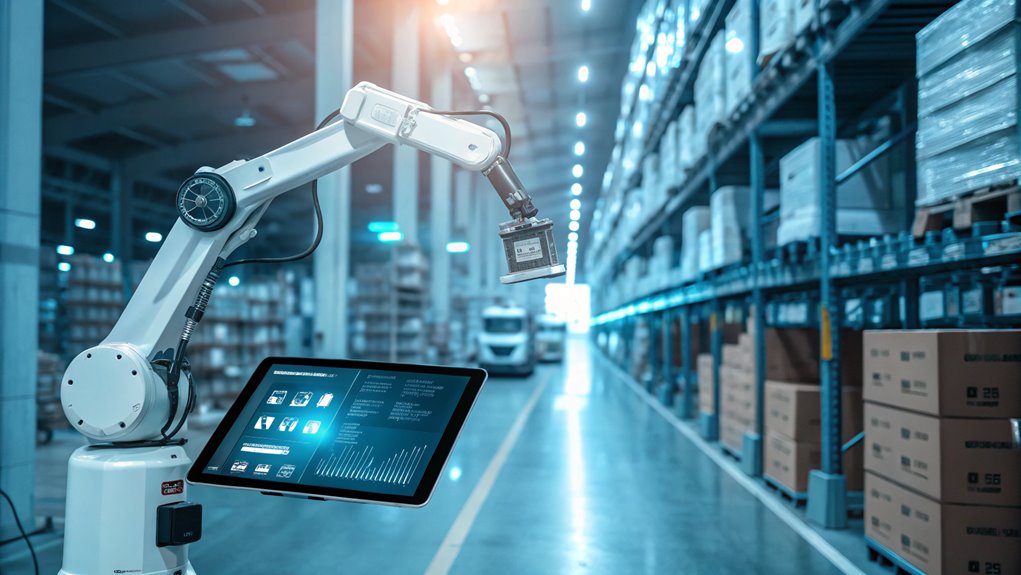
Costs rise while labor stays tight. Same-day and next-day delivery promises set the pace. Disruptions pop up with little warning. Manual workflows cannot keep up, and each delay compounds across inventory, orders, and customer expectations. That is why leaders push hard on automation of supply chain retailers to protect revenue, cut waste, and gain speed without adding headcount.
This guide shows a practical path from assessment to measurable results. You will see how integrated systems and AI shift teams from reactive work to proactive control. You will also see why OptimizePros brings Fortune 500-grade execution to mid-market retailers with a profit-first plan, zero-disruption rollout, and measurable ROI within weeks. The framework that follows turns automation of supply chain retailers into a repeatable program that can save up to $500K per quarter while keeping operations humming.
“What gets measured gets managed.” — Peter Drucker
To frame the opportunity, keep these three goals front and center:
- Cut avoidable costs without hurting service.
- Speed up the order-to-delivery cycle while raising accuracy.
- Improve visibility so teams act before issues spread.
Understanding Supply Chain Automation for Modern Retailers

Supply chain automation is a strategic upgrade that unites AI, RPA, IoT, and modern software to run the full flow of goods from suppliers to customers. In retail terms, this means clean handoffs across sourcing, inventory, warehousing, fulfillment, and delivery with fewer manual touches and far fewer errors. With the automation of supply chain retailers, data moves fast across teams and systems, and action follows that data in real time.
The shift is simple to describe and powerful in practice. You move from reactive, manual work to proactive, data-led orchestration. Instead of waiting for issues, the system predicts demand, flags risk, and routes orders the smart way. That upgrade changes each function from a cost center into an edge you can scale. It also supports growth without a matching rise in cost.
There is a big difference between tactical and strategic automation. Point tools that fix one task help for a while. Strategic automation connects the full chain end to end. Enterprise Resource Planning (ERP) sits at the center and feeds consistent data to WMS, TMS, and AI services. That shared source of truth lets your teams act on the same facts across procurement, inventory, logistics, finance, and customer care.
Executives already point budgets at this area. A recent survey shows 65 percent target supply chain and operations for cost cuts. Add SKU growth, order spikes, and tight delivery windows, and you get the clear business case. The automation of supply chain retailers enables higher volumes, better accuracy, and faster cycle times without bloated overhead.
“In God we trust; all others must bring data.” — W. Edwards Deming
The Technology Foundation: Core Systems Powering Retail Supply Chain Automation

A high-performing retail supply chain runs on an integrated stack. Technology choice is not a set of one-off purchases. It is infrastructure that supports current needs and what comes next. The components below work as one, with clean data flows and real-time control.
| System | Primary Role | Key Data Produced | Typical KPIs Improved |
|---|---|---|---|
| ERP | Financials, orders, inventory master, procurement | POs, SOs, inventory balances, item masters | Cost Per Order, Days Payable Outstanding |
| WMS | Warehouse execution and inventory accuracy | Picks, puts, cycle counts, location status | Order Cycle Time, Picking Accuracy |
| TMS | Planning, tendering, routing, settlement | Carrier selection, tracking, freight audit | On-Time In-Full (OTIF), Freight Cost Per Pound |
| AI/Analytics | Forecasting, optimization, risk scoring | Demand forecasts, exception alerts | Forecast Accuracy, Stockout Rate |
| RPA/IDP | Digital task automation and data capture | Clean entries, reconciliations, matches | Touch Time, Error Rate |
| IoT/RFID | Real-time physical status | Location, condition, timestamps | Asset Utilization, Loss/Theft Reduction |
Enterprise Resource Planning (ERP) as the Integration Hub
ERP acts as the single source of truth for purchasing, inventory, sales, finance, and customer data. When the ERP is modern and cloud-based with strong APIs, it becomes the hub that links automation across the chain. Real-time updates flow to and from WMS, TMS, and analytics so teams see the same facts and act fast. Common roadblocks include messy master data and brittle integrations. OptimizePros tackles both with a zero-disruption approach that stabilizes data, stages integrations, and keeps daily operations intact. Consistent data is non-negotiable because every downstream workflow depends on it.
Pro tips for ERP as the hub:
- Standardize item, vendor, and location masters before connecting downstream systems.
- Use event-driven integrations (webhooks) where possible for near-real-time updates.
- Track a small set of health KPIs: master data error rate, interface retries, and latency.
Warehouse and Transportation Management Systems
A WMS drives the physical side of fulfillment. It runs slotting, picking, packing, and inventory updates with speed and precision. Robots or goods-to-person tech get clear instructions, and the WMS syncs counts back to ERP as items move. A TMS plans and adapts the freight plan in real time. It selects carriers, optimizes loads, and reroutes when conditions shift to protect service and cost. Tight ERP–WMS–TMS integration turns an online order into a coordinated set of steps from the digital cart to the doorstep. Exception management and tracking keep teams informed so small issues never snowball. OptimizePros installs and connects these systems without interrupting your shipping schedule.
What to get right:
- Slot fast movers close to pack-out; revisit slotting monthly during peak seasons.
- Feed TMS with real-time order cutoffs and dock capacity, not just static rules.
- Measure and tune: pick rate, dock-to-stock time, and OTIF by lane.
AI, Machine Learning, and Predictive Analytics
AI and ML add the intelligence layer that turns automation from mechanical to adaptive. Models forecast demand, rebalance inventory by location, score suppliers, and even recommend alternate routes based on current constraints. Predictive analytics spots issues early so leaders act before a disruption hits the bottom line. In one industry poll, 40 percent of companies expect AI to deliver a strong competitive edge. OptimizePros deploys AI where it drives ROI within weeks, not quarters, and ties model outputs directly to automated actions that show up in P&L results.
Practical guidance:
- Start with high-signal SKUs and channels; expand as accuracy proves out.
- Close the loop by wiring model outputs to ERP/WMS/TMS actions, not just dashboards.
- Track forecast error (MAPE), bias, and realized service impact.
RPA, IoT, and Data Capture Technologies

RPA bots handle digital work across systems such as order entry, PO creation, invoice checks, and shipment updates. IoT sensors, RFID, and barcode scanners feed real-time status for location and condition. Intelligent Document Processing extracts structured data from POs, invoices, and contracts with near-zero error. Together they remove manual keying, speed cycle times, and improve accuracy while feeding the broader automation stack with clean, current data.
Tactical wins:
- Use RPA for three-way match and ASN validations where rules are stable.
- Apply RFID to high-shrink categories and fast-move zones first.
- Audit bot performance monthly and re-tune when upstream systems change.
The Business Case: Strategic Benefits of Supply Chain Automation for Retailers

Executives fund what protects profit, reduces risk, and grows value. The automation of supply chain retailers does all three. Use the benefits below to align teams, justify capital, and move with speed and clarity.
Measurable Cost Reduction and Efficiency Gains
Automation cuts labor hours in order processing, inventory control, and fulfillment by double digits while throughput rises. Many retailers see 20 to 40 percent cycle time gains and dramatic error reduction. That combination supports higher volume without proportional cost. OptimizePros clients report up to $500K in quarterly savings driven by fewer stockouts, lower holding costs, and reduced expediting. With 65 percent of executives targeting supply chain for cost cuts, automation is the top lever. Compare cost per order before and after rollout to reveal the TCO and payback. Most cases show a fast payback period and clear cash impact within the first year.
To make the case stick, quantify:
- Labor time saved in order entry, picking, and reconciliation.
- Reduced expediting and premium freight.
- Lower write-offs and shrink from higher inventory accuracy.
- Space gains from better slotting and inventory turns.
“All we are doing is looking at the timeline, from the moment the customer gives us an order to the point when we collect the cash. And we are reducing that timeline.” — Taiichi Ohno
Speed, Accuracy, and Customer Satisfaction
Faster fulfillment enables stronger delivery promises and protects revenue at the cart. Accuracy improves when barcodes, RFID, and guided picking replace manual steps, which lowers returns and service tickets. Real-time inventory visibility prevents backorders that damage trust. Automated notifications keep buyers informed from purchase to delivery. The net effect is higher repeat rates and lifetime value. In tight retail categories where products look the same, operational precision becomes the brand.
Track these service KPIs:
- OTIF
- Perfect Order Rate
- Return Rate (with reasons)
- Click-to-Delivery Time
Strategic Agility and Resilience
Automation expands visibility across suppliers, lanes, and facilities so you spot risk early. AI supports tier‑n insight to flag issues beyond direct vendors. Digital twin models allow scenario tests before decisions go live. That speed and foresight helped retailers adjust during recent global shocks and protect service levels. KPMG found that more than 40 percent of companies lack clear supplier visibility, which leads to surprises that cost money. OptimizePros designs systems that see ahead and adapt quickly, which turns volatility into manageable variance rather than crisis.
Critical Implementation Challenges and Expert Mitigation Strategies
Automation at scale is complex, but it is predictable with the right plan. Treat each hurdle as a design choice and the program moves forward without stalls. OptimizePros guides teams through each step so the business stays on track while the tech upgrades take place.
Investment Justification and Budget Allocation
Boards ask about capital, payback, and risk. A recent survey shows 55 percent of companies plan to raise supply chain budgets because the returns are strong. Win approval with a phased plan that proves value before full rollout. OptimizePros starts with a proof of concept that quantifies early gains and refines the model. Compare TCO with the cost of inaction which includes stockouts, expediting, write-offs, and churn. Position the case as profit protection and competitive necessity, not optional spend.
Make your ask crisp:
- Start–scale plan with milestones and exit criteria.
- Hard dollar impact by line item (labor, freight, inventory).
- Risk controls for integration, data, and adoption.
- Executive sponsors with clear roles.
Integration Complexity and Legacy System Constraints
Most retailers run older ERPs and a patchwork of apps. Integration fails when data is inconsistent or interfaces are brittle. An API-first design with middleware reduces friction and risk. OptimizePros executes zero-disruption integration in phases, protects daily operations, and standardizes master data as part of the rollout. The result is clean handoffs, predictable timelines, and a stable base for future automation.
Watch for these red flags:
- Multiple item masters with conflicting attributes.
- Point‑to‑point integrations that break on change.
- Manual reconciliation steps after “automated” handoffs.
Change Management and Workforce Adaptation
Technology only pays back when users adopt it. Resistance often ties to fear of job loss or unclear roles. Training that builds confidence, not just tool knowledge, shifts the mindset. Roles move from manual tasks to oversight, exception handling, and improvement. With labor tight, automation augments your team rather than replaces it. OptimizePros bakes change management into the program with clear communication and hands-on sessions that raise skill and buy-in.
“It is not necessary to change. Survival is not mandatory.” — W. Edwards Deming
Keys to adoption:
- Role-based training with real data and real tasks.
- Clear “day in the life” examples for each role.
- Visible wins within weeks to build momentum.
Security, Compliance, and Risk Management
Supply chain systems are frequent targets for cyberattacks, and a recent report flagged vendor-driven breaches as a major trend. Design security into the architecture at the start with data governance and audit trails. Automated logs support privacy, trade, environmental, and safety rules. Far from adding risk, well-built automation lowers compliance exposure through consistent documentation.
Security checklist:
- Apply least-privilege access and MFA across all apps.
- Use immutable logs and monitor for anomalous bot behavior.
- Validate vendor security during onboarding and at renewal.
The OptimizePros Implementation Framework: From Assessment to ROI
This is the same framework used with Fortune 500 leaders, tuned for mid-market teams that want results without disruption. The focus stays on cash impact, speed to value, and clear steps. The automation of supply chain retailers becomes a program you can run and scale with confidence.
Phase 1 – Comprehensive Supply Chain Assessment and Digital Twin Development
We start with a full audit of order flow, inventory movement, supplier steps, and warehouse tasks to expose bottlenecks and hidden costs. Financial and operational metrics are benchmarked against leaders in your sector. We map systems, data quality, and integration points to find gaps. Then we assemble a digital twin that merges data from ERP, WMS, TMS, vendor portals, and sensors to show end-to-end performance. Each issue gets a quantified impact and an effort rating. OptimizePros delivers a clear baseline and a priority matrix within a defined timeline so your team sees where the money sits.
Outputs from Phase 1:
- Baseline KPI pack with trends and variance drivers.
- Heat map of constraints by process and node.
- Candidate list for quick wins vs. larger projects.
Phase 2 – Strategic Roadmap and Business Case Development
Assessment insights turn into a plan with measurable targets that align with the company strategy. We design the future-state architecture that uses what you have and adds what you need. The roadmap mixes quick wins and larger projects with dates, owners, and risk notes. A detailed business case shows ROI, payback, and scenario risk. We define a proof of concept to validate core assumptions and set a change plan to prepare users. OptimizePros commits to targets that are realistic and achievable.
What the roadmap includes:
- Technology architecture diagram and interface list.
- KPI targets by quarter and by function.
- Training and comms plan by audience.
Phase 3 – Pilot Implementation and Validation
We select a pilot scope that matters to the P&L and carries low rollout risk. The team deploys tech with a zero-disruption method and runs thorough integration tests. Users get training and a clear way to give feedback. We measure results against the business case, record lessons, and tune workflows. The pilot builds confidence and creates a model to scale. A typical pilot runs a few weeks to a few months with agreed success metrics.
Pilot guardrails:
- Limit variables; pick one site or one category.
- Define go/no‑go criteria before kickoff.
- Publish a weekly scorecard to sponsors and users.
Phase 4 – Enterprise Deployment and Optimization
After validation, we scale in phases to manage risk and keep service levels steady. Training expands to each role group, and change plans drive adoption. We track KPIs across cost, speed, accuracy, and service to keep the program on target. Improvement cycles continue based on live data and pilot lessons. Support transitions from project mode to steady-state ownership with clear guardrails. OptimizePros stays engaged to stabilize and mature the operation.
Sustain and improve:
- Monthly operating reviews with a standard KPI deck.
- Issue backlogs tied to root cause and owner.
- Quarterly roadmap refresh based on results.
Phase 5 – Continuous Improvement and Advanced Capabilities
Automation is not a one-and-done event. We stand up dashboards and alerts that watch the metrics that matter. Quarterly reviews confirm ROI and point to new areas of gain. As data volume grows, advanced AI models raise forecast accuracy and decision quality. We expand automation across new processes where the business case is strong. OptimizePros operates as a long-term partner focused on sustained value, not one-time installs.
Focus areas over time:
- Extend the control tower beyond logistics to include supplier risk and quality.
- Apply predictive models to workforce planning and slotting.
- Add simulation for network design and capital planning.
Top 10 Strategic Automation Use Cases for Retail Supply Chains

Use cases below show where the automation of supply chain retailers delivers fast, measurable gains. Each one ties to a clear business outcome with proven tech and a practical path to rollout.
1. AI-Powered Demand Forecasting and Inventory Optimization (OptimizePros Approach)
OptimizePros deploys machine learning that reads sales history, seasonality, promos, and external signals to predict demand by SKU and location. You move from reactive reorders to predictive placement that puts stock where it will sell. Capabilities include SKU-level forecasts, multi-node balancing, and automated reorder points that update with real data. Results often include 20 to 30 percent lower carrying cost and 15 to 25 percent higher in-stock rates. We connect models to ERP and WMS for touchless execution. The profit-first plan shows ROI through fewer stockouts, less inventory, and fewer urgent freight charges. Seasonal retailers, high-SKU brands, and omnichannel operators gain fast. Typical savings appear within weeks.
A simple rollout pattern:
1) Data intake and cleansing; 2) Model training and backtesting; 3) Shadow mode to compare; 4) Controlled go‑live with guardrails; 5) Continuous re‑training.
Key KPIs: Forecast Accuracy (MAPE), Fill Rate, Inventory Turns.
Operations adage: “Every forecast is wrong; the work is to manage the error.”
2. End-to-End Order Fulfillment Automation
Orders flow from the cart to the dock with minimal manual work. ERP triggers WMS wave planning and smart pick list creation. Pick-to-light or robotics guide operators to the right items and reduce travel. Automated pack stations apply labels and docs while systems update inventory and send customer alerts. Many teams see 40 to 60 percent faster processing and sharp drops in picking errors. The setup requires tight ERP–WMS integration and careful floor design that scales as volume grows.
KPIs to watch: Order Cycle Time, Picking Accuracy, Dock-to-Ship Time.
3. Automated Supplier Performance Management and Risk Monitoring
AI watches supplier delivery, quality, price moves, and response times to create live scorecards. Predictive analytics flags vendors that trend the wrong way before a failure hits your orders. Tier‑n insight looks beyond the first layer to catch issues deeper in the chain. Automated alerts draw attention to expiring contracts or rising risk. This approach supports fair negotiations and smart sourcing, and it answers the visibility gap cited by many executives.
KPIs: Supplier OTIF, First-Pass Quality, Lead Time Variability.
4. Intelligent Procurement and Purchase Order Automation
When inventory drops below a dynamic threshold or demand spikes, the system creates POs and selects the best vendor based on price, lead time, and quality history. Electronic POs land with suppliers and acknowledgments update the plan. Exceptions such as price shifts or delays route to humans with context. Three-way matching checks receipts, POs, and invoices with no manual keying. The result is faster cycles, fewer stockout fires, and more time for strategic sourcing.
KPIs: PO Cycle Time, Match Rate, Expedite Rate.
5. Dynamic Transportation and Routing Optimization
A TMS uses live traffic, weather, capacity, and delivery windows to plan and adapt routes. AI selects carriers and consolidates loads to raise utilization. If a lane slows down, the system reroutes without waiting for manual decisions. Carrier links handle tendering and tracking. Retailers report 10 to 20 percent lower freight cost, better on-time performance, and lower emissions. Clean data and strong carrier partnerships drive results.
KPIs: Freight Cost Per Order, On-Time Delivery, Load Utilization.
6. Automated Warehouse Inventory Cycle Counting
Switch from full shutdown counts to continuous, silent counts. RFID and scanners verify stock as it moves and AI focuses attention on high-value or fast movers. When the system spots a mismatch, it opens a guided check and resolves the difference. Accuracy rises above 95 percent without stopping the operation. ERP and WMS post updates on the fly, and finance gains a cleaner close with less write-off risk.
KPIs: Inventory Accuracy, Adjustments as % of Sales, Count Labor Hours.
7. Intelligent Returns Management and Reverse Logistics
Returns start with automated authorization and clear customer messages. AI picks the best path for each item such as restock at location, refurbish at a center, liquidate fast, or dispose as needed. Routing directs items based on value and condition. RPA speeds refunds and updates inventory counts. Analytics surface root causes so merchants fix the issues that create returns. Costs drop, refunds clear faster, and more value gets recovered.
KPIs: Return-to-Stock Cycle Time, Refund SLA, Value Recovery Rate.
8. Predictive Maintenance for Warehouse Automation Equipment
Sensors on conveyors, sorters, and robots stream data that AI uses to forecast failures. Maintenance windows shift to low-volume periods, which protects service. Unplanned downtime drops by 30 to 50 percent, and gear lasts longer with fewer emergency repairs. A link to the maintenance system schedules tasks and tracks parts. This protects your automation investment and keeps the floor productive.
KPIs: Mean Time Between Failures (MTBF), Unplanned Downtime, Maintenance Cost per Hour.
9. Automated Supplier Onboarding and Compliance Verification
Virtual agents collect required data and docs from new vendors. IDP reads certificates, insurance, and forms, while checks confirm compliance with standards. RPA sets up vendor records and cleans master data. Onboarding time falls by 60 to 70 percent, risk drops from day one, and procurement focuses on value instead of paperwork. This is essential when your network includes many small suppliers with varied documentation.
KPIs: Onboarding Lead Time, Compliance Error Rate, Vendor Master Data Quality.
10. Real-Time Supply Chain Control Tower and Exception Management
A control tower pulls data from ERP, WMS, TMS, supplier portals, and sensors into one view. AI spots exceptions such as delays or inventory gaps and ranks severity. It proposes actions such as reroute, expedite, or switch supplier with the impact shown. Workflows trigger fixes while updates flow to teams and customers. This turns firefighting into proactive control and cuts expediting costs while keeping service promises.
KPIs: Exception Resolution Time, Expedite Cost, Fill Rate.
Emerging Technologies Shaping the Future of Retail Supply Chain Automation
New tech waves are real, but not every idea pays off now. This section separates what to plan for soon from what to monitor. The goal is simple. Tie each trend to a clear business case in the automation of supply chain retailers.
Advanced AI and Autonomous Decision-Making
AI is moving from helpful insights to direct action. Prescriptive analytics recommends moves rather than just projections, and systems start to adjust setpoints on their own. Examples include autonomous inventory rebalancing, dynamic pricing by region, and automatic supplier shifts when risk rises. These tools are maturing fast with practical use in focused areas today. Competitive gain grows when you pilot targeted cases now. OptimizePros already deploys these capabilities for clients who want faster decisions tied to measurable results.
Blockchain for End-to-End Traceability and Trust
Blockchain can record each handoff in a way that cannot be changed. That helps with authenticity, ethical sourcing, and rule compliance. Smart contracts can trigger payment and transfer when conditions are met. Clear product stories also help shoppers who care about origin and impact. Adoption depends on partner readiness and a sound business case. Food, pharma, and luxury goods see early value. Test it when traceability risk is high and existing methods fall short.
Autonomous Vehicles, Drones, and Last-Mile Innovation
Autonomous trucks and delivery bots run in pilots now, with limited routes in defined zones. Rules and infrastructure still need work before wide use. The math can beat current last-mile costs in dense areas and during off-hours. Expect broader use over several years, not months. Retailers should model the network impact and plan integration points while watching policy shifts.
Digital Twins and Advanced Simulation
A digital twin mirrors your supply chain with live data, which allows safe testing of scenarios. You can try new network designs, assess capacity moves, and pressure-test disruption response before changes go live. OptimizePros builds digital twins that tie to KPIs so leaders see clear impact before they approve moves. Data integration and modeling discipline sit at the core, and the payoff shows up in fewer bad bets and faster, safer decisions.
Building Your Business Case: ROI Calculation and Executive Approval
Winning approval requires a CFO-ready case with clear numbers and a crisp plan. Start with the basics. Show total investment, timeline, payback period, and three- to five‑year ROI. Break costs into software, hardware where needed, implementation services, training, change programs, and support. Then size the returns. Quantify labor time saved, error reduction, better space use, and lower freight cost. Add revenue protection from fewer stockouts and better retention. Include cost avoidance such as expediting, penalties, and disruption loss.
Cost and return checklist:
- Costs: licenses/subscriptions, integration and data work, sensors/labels, training, change and comms, support.
- Returns: labor hours saved, reduced expediting, fewer write-offs, lower carrying cost, higher conversion from better availability.
- Risk: integration fit, data quality, adoption; list controls for each.
Simple framing for finance:
- Baseline metrics: Cost Per Order, OTIF, Fill Rate, Inventory Turns, Perfect Order Rate.
- Target deltas per metric and the dollar effect.
- Phasing plan: pilot → scale by site or function → steady state.
Boards have already shifted budgets, with 55 percent raising spend in this area, so position your case within current capital priorities. A phased plan reduces risk. Prove value in a pilot, then scale. OptimizePros structures engagements to deliver measurable wins early that build support, with clients often saving up to $500K per quarter. Close with a tight executive deck, solid documentation, and clear asks for sponsorship and cross-functional alignment.
Tip from the field: “If you can’t trace a benefit to the P&L, it’s a nice-to-have — not a business case.”
Conclusion
Manual, reactive operations cannot keep pace with modern retail. The automation of supply chain retailers moves teams to a faster, smarter, and more resilient model. Costs drop, speed rises, and risk falls. AI and connected systems turn data into action, protect revenue, and free people to focus on work that grows the business.
Yes, the program has moving parts, yet the path is proven. With expert guidance, a phased plan, and the right tech foundation, the lift is manageable and the gains arrive fast. The OptimizePros difference is simple. Fortune 500-grade know-how, a profit-first focus, zero-disruption rollout, and ROI you can measure within weeks. Our clients report up to $500K in savings per quarter with better service at the same time.
Now is the right time to close the gap. Each month of delay widens the distance between leaders and followers. Start with a comprehensive assessment to locate the biggest wins. Then roll out in phases that protect service. Contact OptimizePros for a focused consultation and a clear road map. Partner with experts who deliver results, not just software.
FAQs
Question 1: How Long Does It Typically Take To Implement Supply Chain Automation And See Measurable ROI?
Pilot projects often run eight to twelve weeks, and full programs scale over six to eighteen months in phases. Many teams see measurable gains within weeks of a pilot go-live. OptimizePros designs quick wins into the early plan so value appears fast. Expect pilots to deliver roughly a quarter of the full benefits, with total business case impact within twelve to twenty-four months. Timelines depend on system complexity, data quality, and change readiness across teams.
Question 2: What Is The Typical Investment Required For Retail Supply Chain Automation?
Investment varies with scope and current maturity. Pilots often range from fifty to one hundred fifty thousand dollars, a departmental rollout lands in the two hundred to five hundred thousand range, and enterprise programs span one to five million or more. Costs include software, services, hardware if warehouse tech is added, training, and support. Options exist for subscription models and phased spend. OptimizePros proves value early and targets payback within twelve to twenty-four months.
Question 3: How Do We Address Workforce Concerns About Automation Replacing Jobs?
Automation augments teams, especially when labor is tight. Roles shift from manual entry and repetitive motion to oversight, exception resolution, and improvement work. That change raises job satisfaction and lowers churn because tedious tasks go away. Upskilling plans open paths to higher-value roles. A clear change program with honest communication and hands-on training reduces fear. OptimizePros builds adoption into the plan so your people feel ready and supported.
Question 4: Can Supply Chain Automation Integrate With Our Existing ERP And Legacy Systems?
Yes, modern platforms connect to legacy systems through APIs and middleware that bridge gaps. OptimizePros uses a zero-disruption method that stages integrations, protects live operations, and standardizes master data. We follow proven patterns for major ERPs and only recommend replacement when integration would hold the program back. Data consistency matters as much as connectivity, so governance runs alongside technical work to keep the business stable.
Question 5: What Are The Biggest Risks In Supply Chain Automation Projects And How Can They Be Mitigated?
Common risks include a weak business case, thin sponsorship, poor change planning, and brittle integrations. Reduce risk with a thorough assessment, a phased plan that proves value step by step, and clear success metrics. Pilot first to validate fit and performance before scaling. An experienced partner lowers execution risk across design, data, and adoption. OptimizePros follows a method that addresses each risk category and raises the chance of a strong outcome.
Question 6: How Does Supply Chain Automation Improve Our Ability To Respond To Disruptions?
Automation raises visibility and speeds decisions. AI highlights risk, points to alternate suppliers or routes, and recommends next steps. A control tower brings live data into one view and triggers actions fast. Tier‑n monitoring looks beyond direct vendors to catch deeper issues. Digital twin models allow tests before changes go live. That combination turns surprises into manageable events and delivers an advantage when markets shift.